
Loading...
EMI Studios
0 releases
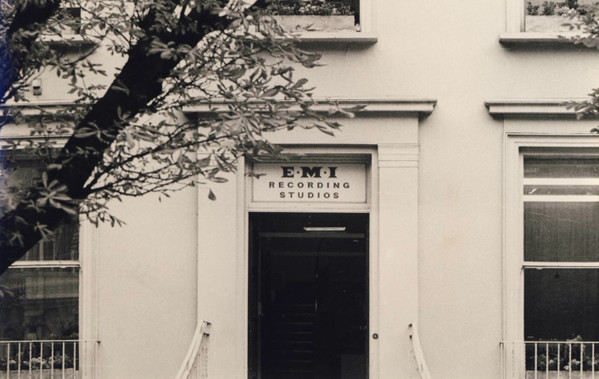
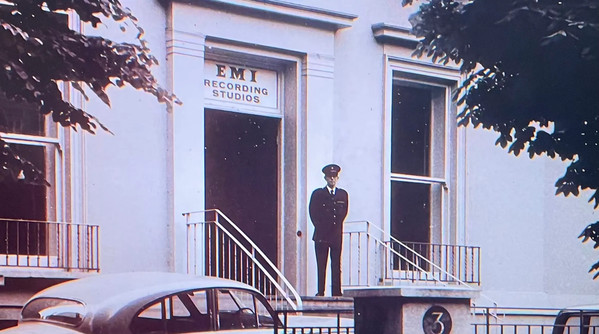
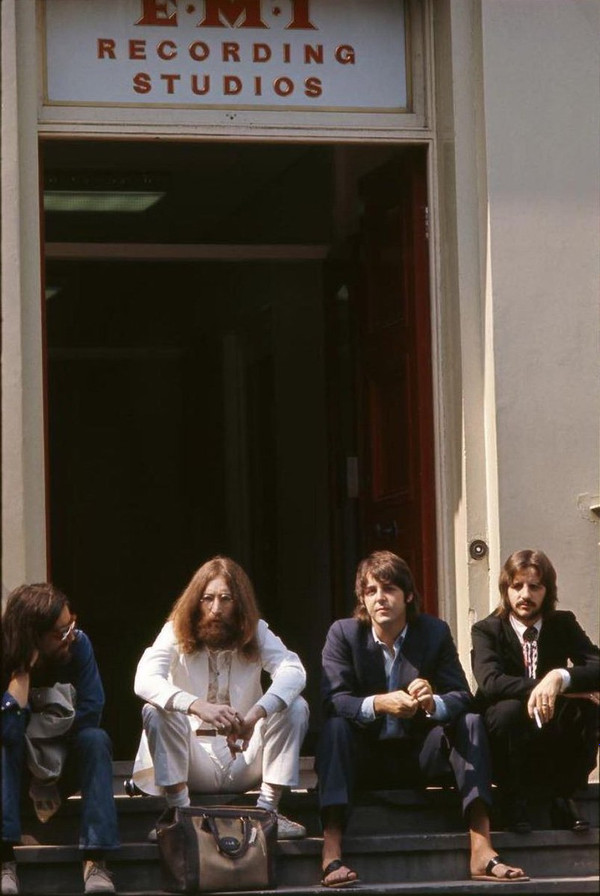
[b]EMI Recording Studios[/b] (also known as Abbey Road Studios or EMI Studios) was a British recording, mixing and mastering studio, located in London, UK, operating under this name from 12 November 1931 until 1984. Legally renamed to [b][l=Abbey Road Studios][/b] in 1985.
[b]Note #1[/b]: For pre-1985 recordings that include "EMI" in the studio name, in whatever variation, please use this profile (see also Note #3).
[b]Note #2[/b]: There were many EMI studios around the world. Please, make sure to choose the right one (by checking e.g. the engineers, the nationality of the artist(s), etc.).
[b]Note #3[/b]: For the EMI studio, located at the EMI House in Manchester Square, please use [b][l=EMI Studios, Manchester Square, London][/b].
[b]Note #4[/b]: For the Australian studios, see [b][l=EMI Studios, Homebush][/b], [b][l=EMI Studios Sydney][/b] or [b][l=EMI Studios 301][/b].
It may appear as:
- EMI Studios Abbey Road
- EMI Studios, Abbey Road, London
- EMI Studios, Abbey Road, St. John's Wood, London
- E.M.I. Studios Abbey Road
- E.M.I. Abbey Road Studios
- EMI Abbey Road, London
- EMI Abbey Road Studios
- E.M.I. Studios, St. John's Wood, London
- EMI-Studios - Abbey Road
EMI Recording Studios was the oldest, purpose-built recording studio in the world.
In 1929, [l=The Gramophone Co. Ltd.] acquired the premises of a nine-bedroom Georgian townhouse at 3 Abbey Road in the City of Westminster in London. Three purpose-built studios were constructed and the existing house was adapted for use as administration offices.
On 20 April 1931, The Gramophone Company Ltd. merged with [l=Columbia Graphophone Company Ltd.] to form [l=Electric & Musical Industries Ltd.] (EMI).
filmed the opening of the studios on 12th November 1931, when [a=Sir Edward Elgar] conducted [a=The London Symphony Orchestra] in recording sessions of his work "Land of Hope and Glory".
In 1934, the inventor of stereo sound, Alan Blumlein, recorded [url=https://www.discogs.com/artist/95546-Wolfgang-Amadeus-Mozart]Mozart[/url]'s "[m=3091578]" which was conducted by [a=Sir Thomas Beecham].
During the mid-20th century, the studio was extensively used by British conductor [a=Sir Malcolm Sargent].
On 24 July 1958, Studio Two became a centre for rock and roll music, when [a=Cliff Richard & The Drifters] recorded [m=525488] there. The studios are closely associated with [a=The Beatles], who recorded almost all of their albums and hits there between 1962 and 1970 using the four-track REDD mixing console designed by [url=https://www.discogs.com/artist/859026-Peter-Burkowitz]Peter K. Burkowitz[/url].
Engineers known to have worked here:
- [a=Fred Gaisberg]
- [a=George Martin]
- [a=Geoff Emerick]
- [a=Norman Smith]
- [a=Ken Scott]
- [a=Mike Stone]
- [a=Alan Parsons]
- [a=Peter Vince]
- [a=Malcolm Addey]
- [a=Peter Bown]
- [a=Richard Langham]
- [a=Phil McDonald]
- [a=John Kurlander]
- [a=Richard Lush]
- [a=Chris Blair] (chief mastering engineer)
- [a=Brian East]
- [a=Ken Townsend] (became studio manager in 1974)
FILTER
All Artists
All Labels
No records from this label currently in stock. Check back soon!
| PRICE | Image | Title | Artist | Genre | Style | Label | Year | Country | Format | Condition | Comment | |
|---|---|---|---|---|---|---|---|---|---|---|---|---|
| No records from this label currently in stock. Check back soon! | ||||||||||||
No records from this label currently in stock. Check back soon!
1-0 of 0