
Loading...
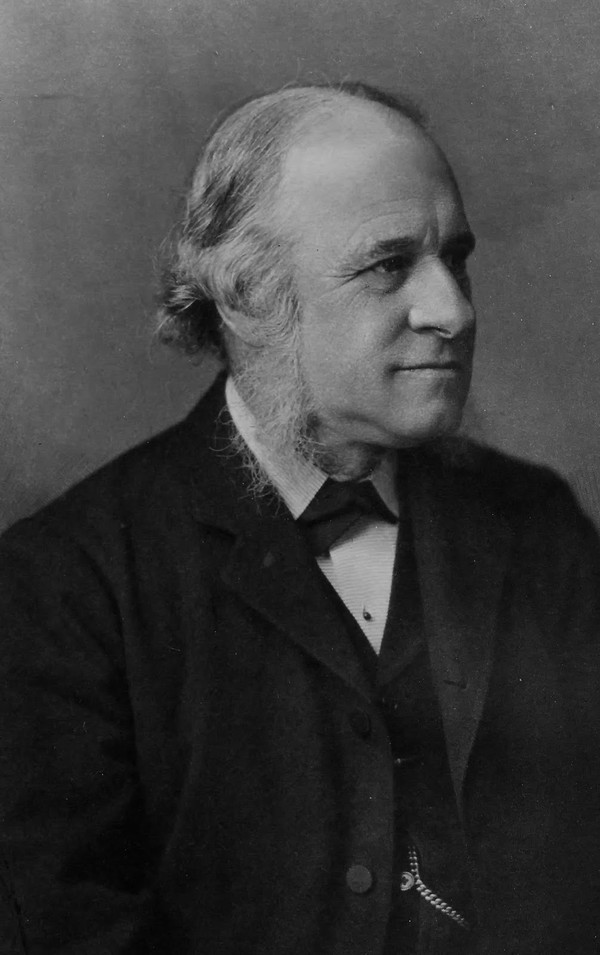
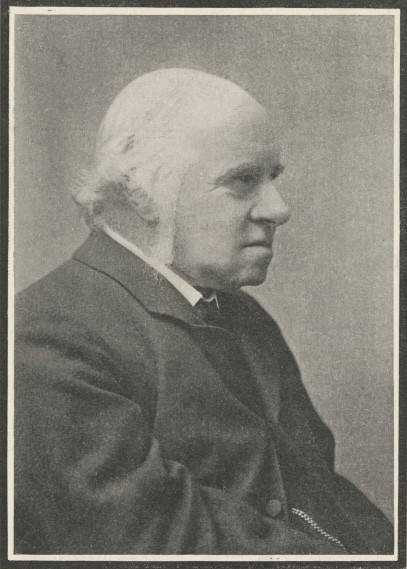
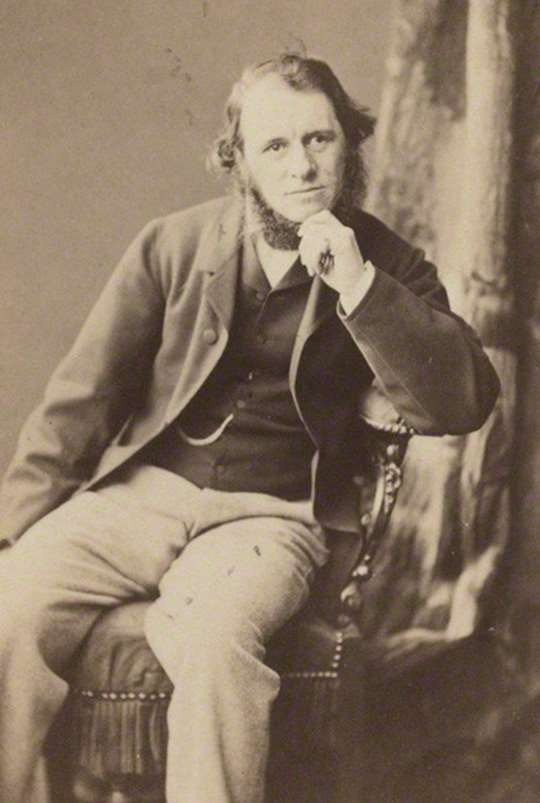
George Grove
[b]Sir George Grove[/b] (13 August 1820, London — 28 May 1900, [i]Ibid.[/i]) was a British musicologist, scholar, arts administrator, and lexicographer, best known as the inaugural director of the [url=https://discogs.com/label/290263]Royal College of Music[/url] (from its foundation in 1883 until Grove's retirement in 1894), and the founding editor of [i]Grove's Dictionary of Music and Musicians[/i], first published by [url=https://discogs.com/label/913580]Macmillan[/url] in 1879–89. Still in print over 130 years later, it's regarded as one of the most reputable and authoritative reference English publications on academic and contemporary music. Since 2004, the [i]New Grove Dictionary of Music and Musicians[/i] has been owned and published by [b][l=Oxford University Press][/b] (also accessible via [i]Grove Music Online[/i] paywall service).
Grove had a career in civil engineering before his passion for music prevailed, and he became a music administrator and secretary at the Crystal Palace in London. For many years, George organized orchestral concerts and wrote countless programme notes. Particularly fascinated with [a=Franz Schubert] (largely forgotten in England in the mid-XIX century), Grove traveled to Vienna with his friend, British composer [url=https://discogs.com/artist/844248]Arthur Sullivan[/url] (1842—1900), to search for Schubert's manuscripts. In 1867, they discovered a few symphonies and other works, including his lost "incidental music" score for [a=Helmine Von Chézy]'s play [i]Rosamunde[/i] (1823); their research subsequently led to renewed interest in Schubert's music in the UK.
In 1873, George Grove resigned from the Crystal Palace and joined prominent [b][url=https://discogs.com/label/913580]Macmillan Publishers[/url][/b] in London as the company's director. In March 1874, Grove pitched his [i]magnum opus[/i] — a comprehensive encyclopedia devised to be among the first "English works on the history, theory, and practice of music, and the biographies of musicians, accessible to the non-professional reader." Initially planned as a two-part edition of about 600 pages per volume, [i]A Dictionary of Music and Musicians[/i] resulted in four volumes with 3,120 pages, issued by Macmillan over 12 years. The second edition, under [a=John Fuller Maitland], came out in five volumes (1904 to 1910), renamed "[i]Grove's Dictionary…[/i]" to commemorate the original author. From 1927 to 1954, Macmillan ran five more editions (with and [a=Denis Stevens] as editors), reprinted many times throughout the 1960s and mid-1970s. It was rebranded as "[i]The New Grove Dictionary…[/i]" and expanded to 20 volumes in 1980, edited by [a=Stanley Sadie] and [a=Nigel Fortune].
In 1882, Grove became the new director of the National Training School for Music in London, which at the time was on the brink of survival; the parliament even proposed to merge it with the equally struggling [l=Royal Academy of Music] (which retained its autonomy, though, and subsequently revived under [a=Sir Alexander Campbell Mackenzie]). George led a successful fundraising campaign, leading to the official opening of the [b][url=https://discogs.com/label/290263]Royal College of Music[/url][/b] in May 1883; the same day, Grove received his knighthood.