
Loading...
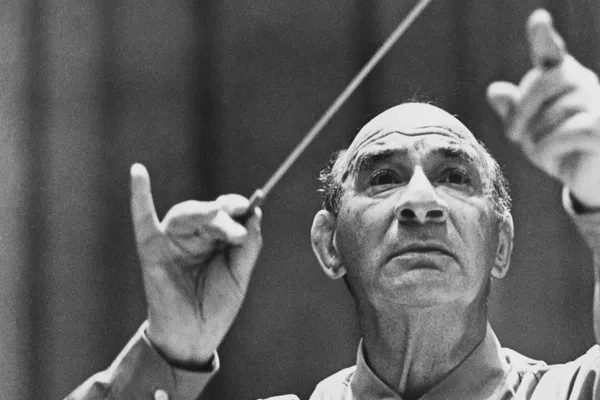
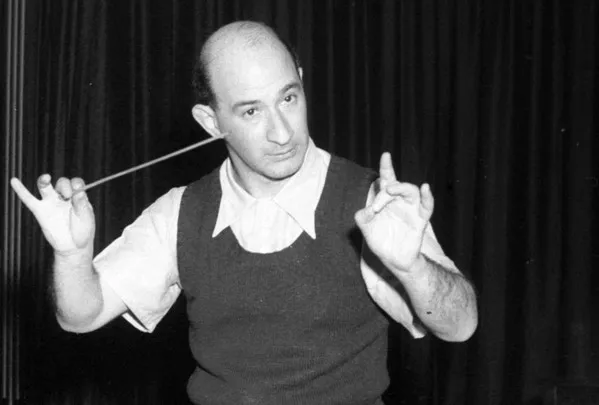
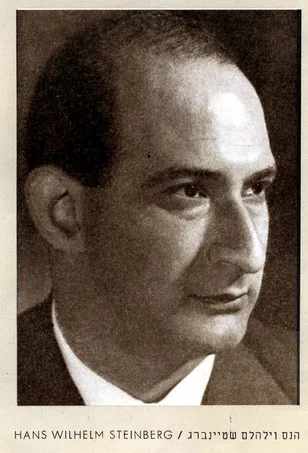
William Steinberg
Real Name: Hans Wilhelm Steinberg
German-American conductor (1 August 1899, Cologne, Germany - 16 May 1978, New York City, New York, USA).
Steinberg worked as an apprentice under [a=Otto Klemperer] at the Cologne Opera ([l=Oper Köln]) and in 1924 became principal conductor there. He conducted opera at Prague (1925–29) and Frankfurt-am-Main (1929–33). After establishing himself as a conductor in Germany, Steinberg fled the Nazi regime in 1936 and emigrated to Palestine. He founded, with [a=Bronislaw Huberman], the Palestine Symphony (later the [a=Israel Philharmonic Orchestra]) in 1936. It was there he gained the notice of [a=Arturo Toscanini], who invited him to become associate conductor of the newly formed [a=NBC Symphony Orchestra]. In 1938 Steinberg went to the United States and became assistant to Arturo Toscanini at the NBC Symphony from 1938-40. He conducted summer concerts at [l=Lewisohn Stadium, New York] at the City College of New York (1940–41), led [a=New York Philharmonic] concerts in 1943–44, and also conducted at the [l=San Francisco Opera]. He became a US citizen in 1944, and was engaged as music director of the [a=Buffalo Philharmonic Orchestra] from 1945 to 1952.
Steinberg is best known for his long tenure as music director of the [a=Pittsburgh Symphony Orchestra] from 1952 to 1976. Steinberg's Pittsburgh appearances in January 1952 were so impressive, he was quickly engaged as music director and also signed to a recording contract with [l=Capitol Records]. From 1958 to 1960, he also conducted the [a=London Philharmonic Orchestra], but eventually resigned that post due to medical concerns. Steinberg led the [a=New York Philharmonic] for twelve weeks while on sabbatical leave from Pittsburgh in 1964–65; This led to his engagement as the Philharmonic's principal guest conductor from 1966 to 1968. From 1969 to 1972, Steinberg was also the music director of the [a=Boston Symphony Orchestra], while maintaining his Pittsburgh post. He retired as music director of the Pittsburgh Symphony in 1976 after building it into one of the strongest musical institutions in the United States.